
FROM YOSHITHA’S KITCHEN
Thai Yellow Fish Curry
By Yoshitha ·
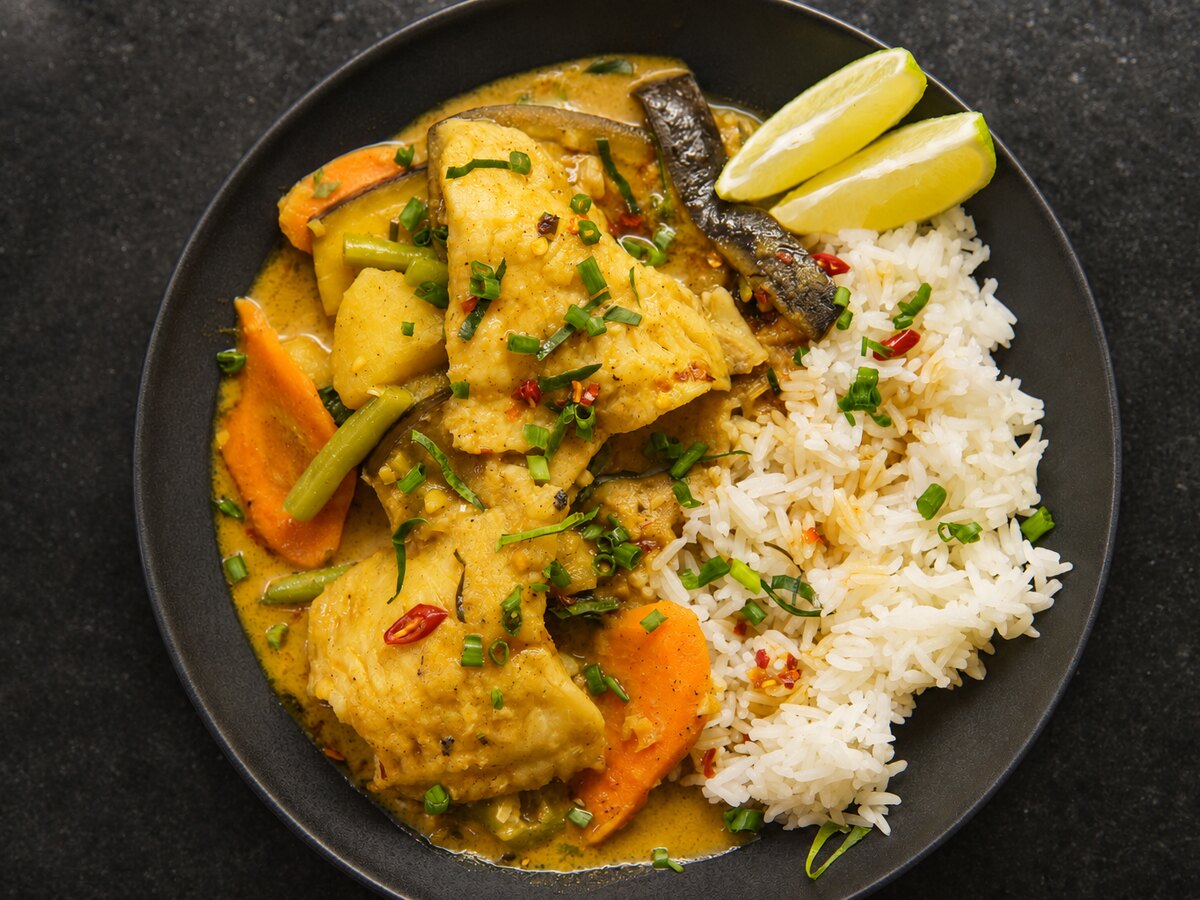
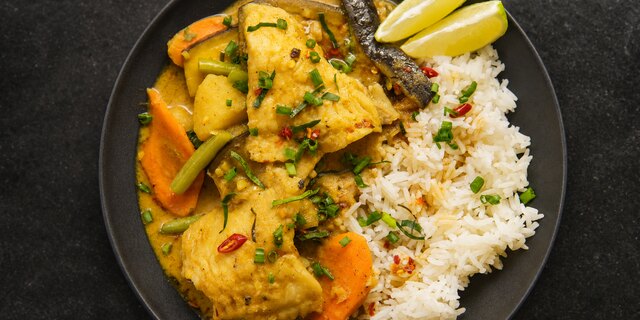
This is my take on Thai yellow fish curry (แกงกะหรี่ปลา). I had potatoes, aubergine, green beans, pepper and carrots at home, so into the wok they went. I like a generous amount of fish and vegetables in this one, and you can use more or less of whatever you have. I serve it with jasmine rice and my chilli–soy–lemon sauce, a personal twist inspired by prik nam pla.
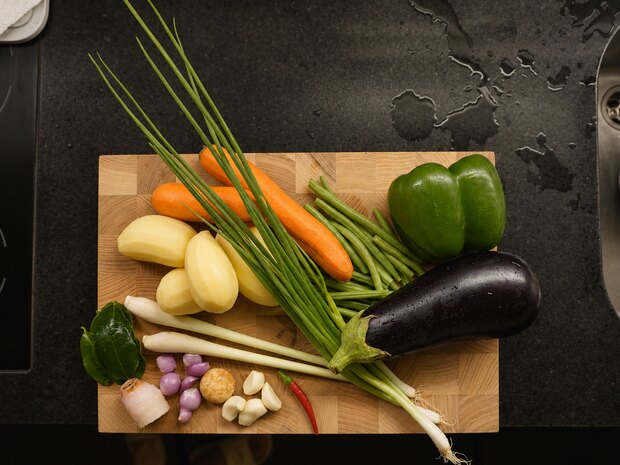
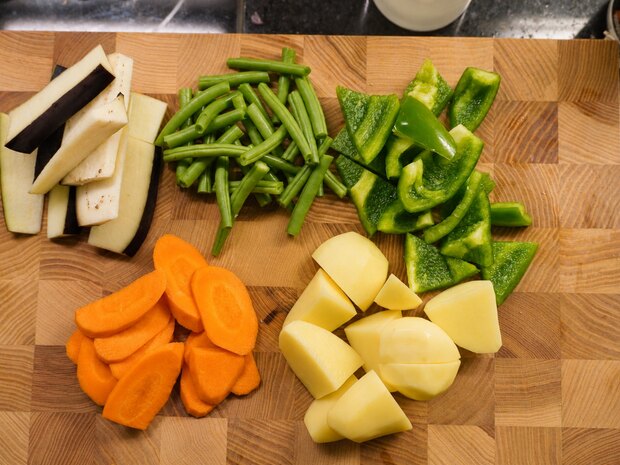
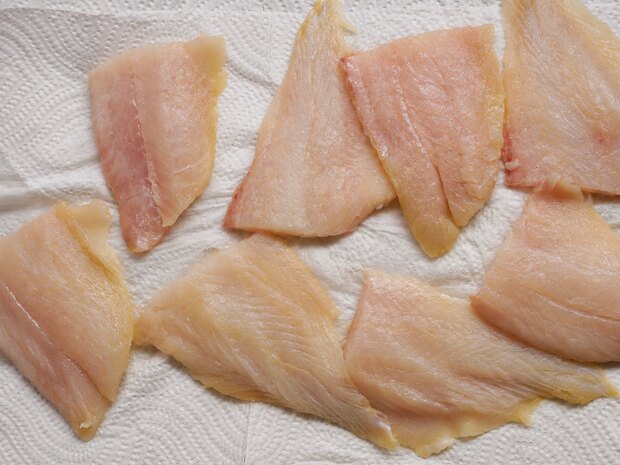
Peel the potatoes and cut them into roughly 2–3 cm chunks. Cut the aubergine into short batons, the beans into 3–4 cm pieces, the green pepper into bite-sized pieces and the carrots into thick diagonal slices. Pat the fish dry and cut it into large pieces.
Stir in the remaining coconut milk, vegetable stock, fish sauce and oyster sauce. Add fresh chilli if you like. Bring to a boil, then reduce to a gentle simmer.
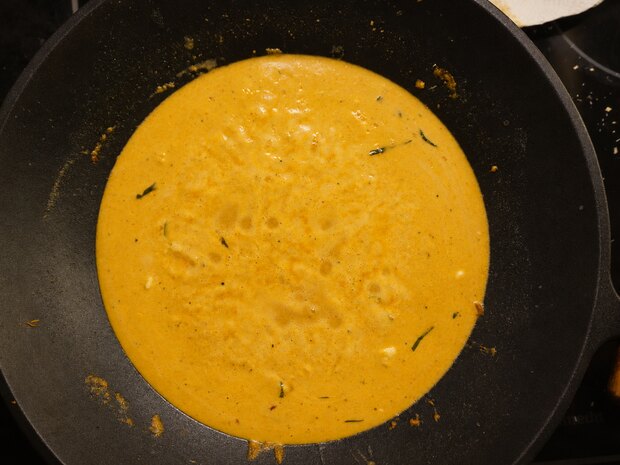
Add the potatoes and simmer for about 8–12 minutes, or up to 15 for larger chunks, until a knife goes in partway with some resistance. Add the carrots and simmer for 5 minutes. Add the aubergine, beans and pepper and simmer for another 4–6 minutes, until almost tender. Add a splash of water if the sauce is getting too thick.
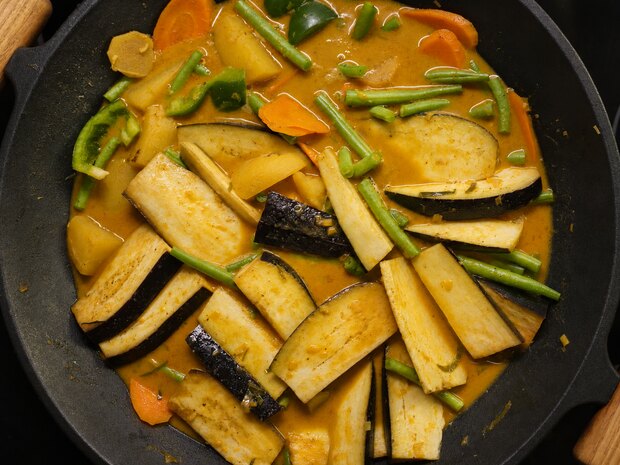
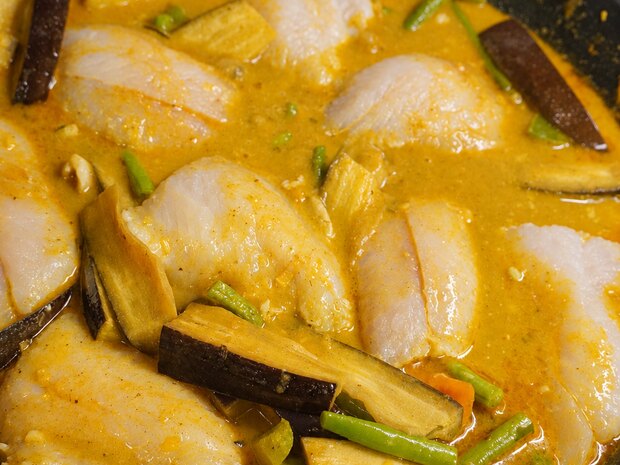
Lay the fish over the vegetables, press it gently into the sauce and spoon curry over the exposed pieces. Cover and simmer gently for about 5–8 minutes, depending on thickness, until the fish flakes readily, is opaque throughout or reaches 63°C (145°F) at the thickest point. Avoid stirring the fillets. Remove the galangal, stir Thai basil into the sauce if using and taste for salt.
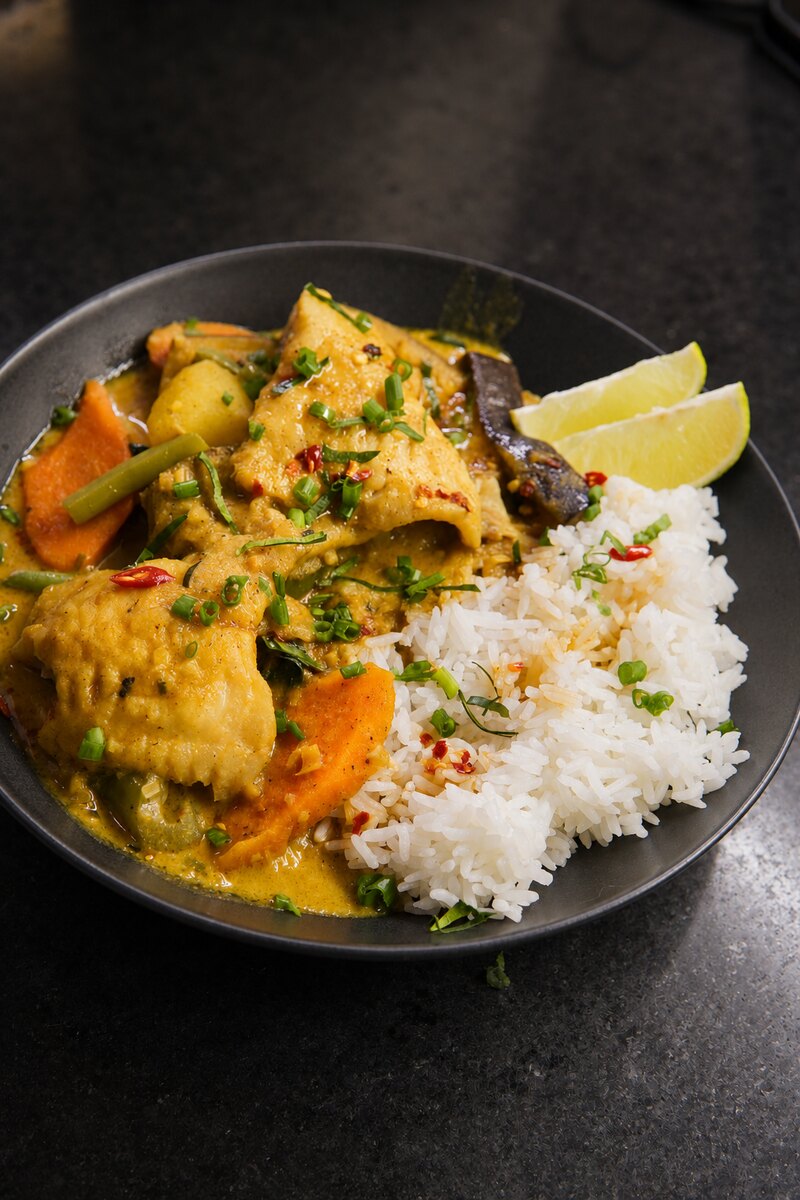
Serve with jasmine rice, lime wedges and the reserved kaffir lime leaves and spring onions.
Thai Yellow Fish Curry
Ingredients
- 2–3 potatoes about 300 g, peeled
- 1 aubergine (eggplant) about 300 g
- 200 g green beans trimmed
- ½ green bell pepper about 75 g
- 2 carrots about 140 g
- 500 g ocean perch fillets redfish, cut into large pieces
- 500 ml full-fat coconut milk divided
- 200 ml vegetable stock
- 1 tbsp fish sauce or to taste
- 1 tbsp oyster sauce or to taste
- 20 g palm sugar shaved, about 1½ tbsp
- 4 cm galangal thickly sliced
- 2 heaped tbsp Thai yellow curry paste about 40 g
- 4 garlic cloves
- 2 lemongrass stalks tender lower parts
- 3–4 small shallots or 1 small onion
- 6 kaffir lime leaves roughly; reserve some for garnish
- salt to taste
- fresh chilli and Thai basil optional
To serve
- cooked jasmine rice for serving
- spring onions and lime wedges for serving
Instructions
- Fold each kaffir lime leaf and pull out the tough central stem. Stack and roll the leaves, slice them thinly and reserve a little for garnish. Shave the palm sugar from the disc. Slice the galangal thickly so you can remove it later. Peel off the tough outer layers of the lemongrass, bruise the tender lower stalks and slice them very finely. Smash and roughly slice the garlic, slice the shallots and finely slice the spring onions if using.
- Pour about a third of the coconut milk (165 ml) into a wok or wide pan. Let it simmer over medium heat, stirring occasionally, until it thickens and small beads of coconut oil appear. While it reduces, prepare the vegetables and fish.
- Peel the potatoes and cut them into roughly 2–3 cm chunks. Cut the aubergine into short batons, the beans into 3–4 cm pieces, the green pepper into bite-sized pieces and the carrots into thick diagonal slices. Pat the fish dry and cut it into large pieces.
- Once the coconut milk has thickened and the oil has separated, fry the yellow curry paste in it for 1–2 minutes. Add the garlic, shallots, sliced kaffir lime leaves, palm sugar, galangal and lemongrass. Stir and fry for another 1–2 minutes.
- Stir in the remaining coconut milk, vegetable stock, fish sauce and oyster sauce. Add fresh chilli if you like. Bring to a boil, then reduce to a gentle simmer.
- Add the potatoes and simmer for about 8–12 minutes, or up to 15 for larger chunks, until a knife goes in partway with some resistance. Add the carrots and simmer for 5 minutes. Add the aubergine, beans and pepper and simmer for another 4–6 minutes, until almost tender. Add a splash of water if the sauce is getting too thick.
- Lay the fish over the vegetables, press it gently into the sauce and spoon curry over the exposed pieces. Cover and simmer gently for about 5–8 minutes, depending on thickness, until the fish flakes readily, is opaque throughout or reaches 63°C (145°F) at the thickest point. Avoid stirring the fillets. Remove the galangal, stir Thai basil into the sauce if using and taste for salt.
- Serve with jasmine rice, lime wedges and the reserved kaffir lime leaves and spring onions. I like to serve it with my chilli–soy–lemon dipping sauce.
Notes
What to cook next
Leave a Reply